
Welcome to the Eternal City
Your Ultimate Guide to Discovering the Soul of Rome
Planning a trip to Rome? Discover the history, iconic landmarks, and hidden gems of the Eternal City, and explore our curated guided tours to experience Rome like a local.
It is often said that a city can be captured through a single breathtaking view, a specific color, a lingering scent, an object, or even just an idea.
In Rome, it is precisely these subtle, fleeting nuances—the warm ochre of a sunlit facade at golden hour, the aroma of freshly ground espresso drifting from a cobblestone alley, the soothing sound of water splashing in a centuries-old fountain—that transform into indelible memories.
For centuries, the magic of Rome has been immortalized on paper by poets and writers, and vividly depicted on canvas by history’s greatest artists. As Charles Dickens famously wrote in Pictures from Italy, “It is a city that can never be exhausted; a city where every stone tells a story of the ages.”
Eternal and deeply mysterious, the Italian capital wraps every traveler in a pleasant, inescapable longing—what locals fondly call “mal di Roma”—that stays with you long after your flight home. It is no coincidence that millions of visitors hurry to toss a coin over their left shoulder into the Trevi Fountain, hoping to ensure their return. As the German writer Johann Wolfgang von Goethe famously observed during his Italian journey, in Rome, “everything is just as one imagined it, and yet everything is new.” So, every time you come back to Rome, you realize that one lifetime it is not enough to uncover the Eternal City and all its hidden treasures. Even if you have already seen its iconic landmarks, with our expert guides, you can always look closer to discover new details, fascinating stories, ancient legends, and untold tales. And you will truly understand the words of Goethe.
Whether you are planning your very first trip to Rome or looking to dive deeper into its secrets, welcome to our blog. In this foundational guide, we invite you to walk with us through the profile, the heart, and the vibrant colors of the Eternal City—and discover how experiencing it alongside an expert local guide can turn a simple visit into the journey of a lifetime.
Myth and Origins: The Seven Hills and the Birth of Rome (753 BC)
Every great story needs a legendary beginning. According to ancient myth, Rome owes its existence to Romulus and Remus, the twin sons of the Vestal Virgin Rhea Silvia and Mars, the god of war. Abandoned on the banks of the Tiber river and famously nursed by a she-wolf, the twins were rescued and raised by the shepherd Faustulus and his wife.
Once grown, they decided to build a new city. To settle who would rule, they looked to the skies for divine signs through the flight of sacred birds. From the Aventine Hill, Remus spotted six vultures; from the Palatine Hill, Romulus saw twelve. Thus, on April 21, 753 BC, Romulus became the first King of Rome. From that original settlement on the Palatine, the city expanded across the famous Seven Hills of Rome: the Palatine, Aventine, Capitoline, Quirinal, Viminal, Esquiline, and Caelian—each carrying its own unique history and hidden corners waiting to be explored.
The “Blond” Tiber: Rome’s Lifeline
In the poetry of ancient Rome, the Tiber was revered as a living river god—Flavus Tiberis, the “Blond Tiber,” named for the golden-yellow hue of the sediment carried by its waters. Beyond its spiritual significance, the river served as a bustling aquatic highway. From antiquity onward, thriving ports lined its banks, handling marble, wine, and spices from across the Empire.
In the late 19th century, massive stone embankment walls (muraglioni) were built to protect the city from devastating floods, forever changing Rome’s physical connection to the water. Yet, the city’s deep respect for its river endures. Today, walking along the riverbanks or crossing historic bridges like Ponte Sisto, Ponte Fabricio (the oldest original bridge in Rome, built in 62 BC), and the angel-lined Ponte Sant’Angelo offers some of the most romantic and photogenic views in Europe—especially during an evening stroll along the Tiber.
An Open-Air Museum: Rome’s Unrivaled Cultural Heritage
To walk through Rome’s historic center, is to walk through nearly three millennia of human achievement. Framed by the ancient Aurelian Walls, the city boasts the highest concentration of historical, archaeological, and architectural treasures on the planet—holding over 16% of the world’s cultural heritage and 70% of Italy’s.
In 1980, the historic center, along with the extraterritorial properties of the Holy See and the Basilica of Saint Paul Outside the Walls, was rightfully inscribed as a UNESCO World Heritage Site. Furthermore, as the beating heart of Catholic Christianity, Rome holds a unique geopolitical distinction: it is the only city in the world to enclose an entirely separate, sovereign nation within its borders—Vatican City—earning it the title of the “Capital of Two States.” With so much history layered in every square inch, joining a guided tour of the Vatican Museums and St. Peter’s Basilica is the best way to unlock the stories behind the masterpieces without getting overwhelmed. 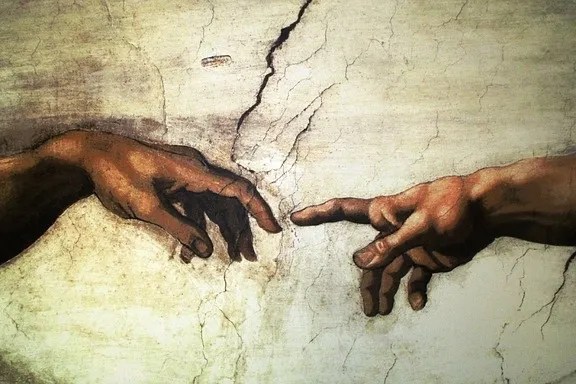
The Big Five: Must-See Landmarks in Rome
If you are crafting a Rome itinerary for your first visit, five iconic landmarks stand out as absolute essentials. To make the most of your time and skip the long ticket lines, consider exploring them with an expert storyteller:
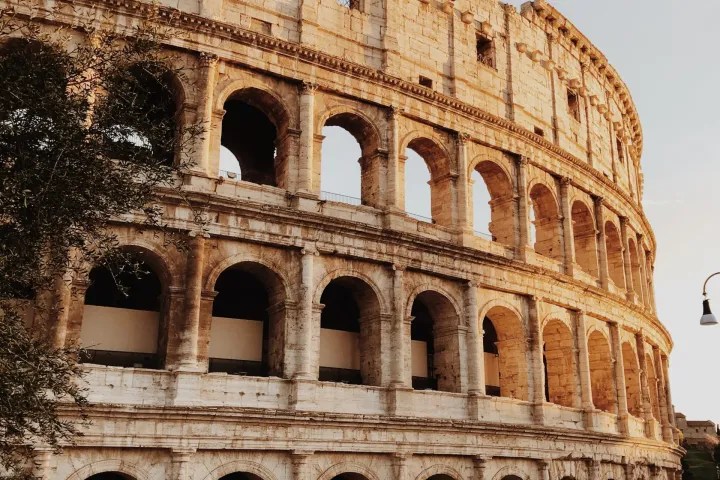
- The Colosseum: The mighty Flavian Amphitheater, an engineering marvel of the ancient world and one of the New Seven Wonders of the World. Step onto the arena floor and hear the true stories of gladiators and emperors.
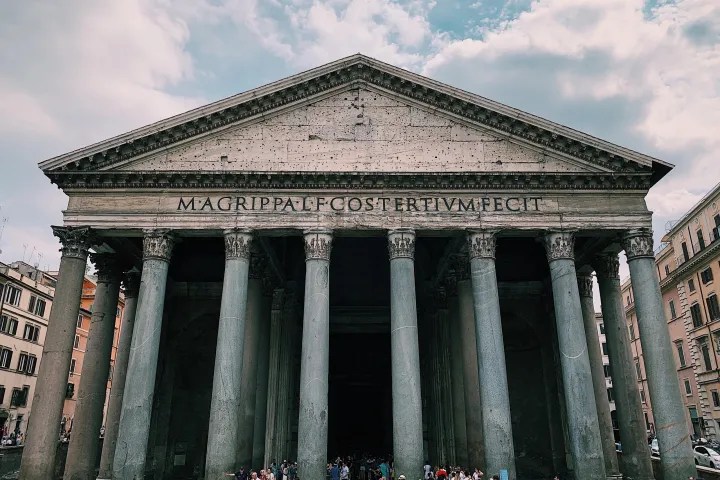
- The Pantheon: Originally a Roman temple and now a church, featuring the world’s largest unreinforced concrete dome and its famous open oculus.
- The Roman Forum and Palatine Hill: Walk the very stones where Julius Caesar walked in the political, religious, and social epicenter of the ancient Roman Empire.
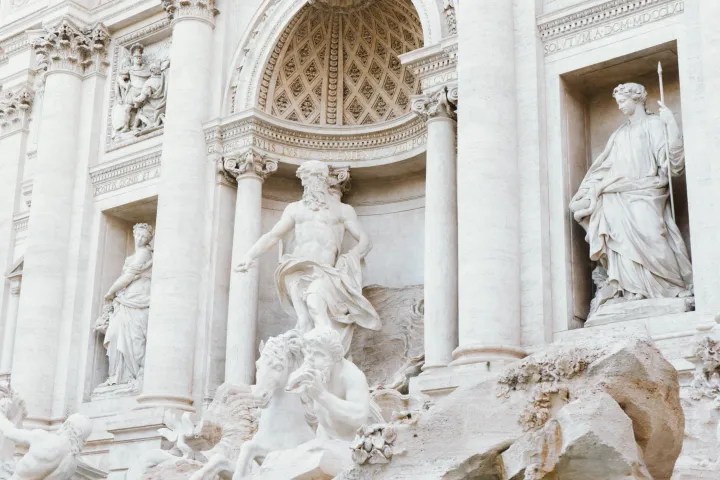
- The Trevi Fountain: Nicola Salvi’s Baroque masterpiece, where architecture and cascading water merge in dramatic fashion.
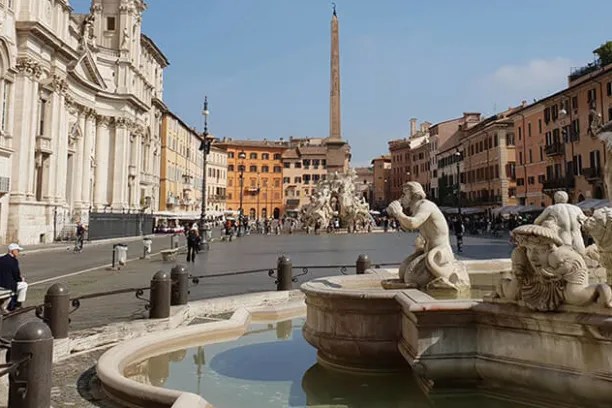
- Piazza Navona: Built over the ancient Stadium of Domitian, famous for its lively street artists and Bernini’s Fountain of the Four Rivers.
Rome’s Secret Green Soul: Parks, Villas, and Viewpoints
Many travelers are surprised to discover that Rome is actually one of the greenest capitals in Europe. Beyond the marble ruins lies a lush tapestry of historic parks and aristocratic estates, enriched with sunken gardens, hidden sculptures, serene lakes, and ancient aqueducts.
Whether it is spring blossoms, golden autumn foliage, crisp winter strolls, or shady summer escapes, Rome is a year-round destination. You can lose yourself in the grandeur of Villa Borghese (home to Bernini and Caravaggio masterpieces inside the world-renowned Borghese Gallery), the expansive Villa Doria Pamphilj, Villa Ada or the eclectic Villa Torlonia, or Villa Farnesina. For history buffs and nature lovers alike, exploring the Appian Way Regional Park and Catacombs offers an unforgettable journey down the ancient Regina Viarum lined with cypress trees and underground mysteries. And when the sun begins to set, head to the Orange Garden (Giardino degli Aranci), the Pincian Hill (Pincio), or the Janiculum Hill (Gianicolo) for sweeping panoramas over Rome’s terracotta rooftops.
Emblems of Eternity: Rome’s Coat of Arms and Symbols
Officially adopted in 1884, Rome’s municipal coat of arms features a deep purple shield—the color of imperial majesty—adorned with a Greek cross and the famous golden acronym S.P.Q.R. (Senatus PopulusQue Romanus, meaning “The Senate and People of Rome”), topped by an eight-pointed golden crown.
Beyond heraldry, Rome lives in the global imagination through powerful visual icons:
- The Capitoline Wolf: The iconic bronze sculpture of the she-wolf nursing Romulus and Remus, preserved inside the Capitoline Museums.
- The Imperial Eagle and the Lion: The eagle symbolized the military might of ancient Rome, while the lion represented civic supremacy during the Middle Ages.
- The Colosseum and the Trevi Fountain: Timeless emblems of ancient grandeur and Baroque beauty.
- The “Cupolone”: Michelangelo’s soaring dome of St. Peter’s Basilica in the Vatican, which dominates the Roman skyline from almost every angle.
Speaking Like a Local: Famous Roman Proverbs
Rome’s towering influence on Western civilization is even embedded in everyday language. Here are a few classic sayings that capture the Roman spirit:
- “When in Rome, do as the Romans do”: The universal golden rule for travelers—embrace local customs, slow down, and enjoy life at a Roman pace.
- “Rome wasn’t built in a day”: A timeless reminder that greatness requires patience, dedication, and careful craftsmanship.
- “All roads lead to Rome”: Born from the Empire’s extraordinary 50,000-mile paved road network, all radiating outward from the Milliarium Aureum (Golden Milestone) in the Roman Forum.
Celebrate With the Locals: Key Annual Events in Rome
Timing your visit around local festivities can add an unforgettable dimension to your trip:
- April 21 – Rome’s Birthday (Natale di Roma): The city celebrates its mythical founding in 753 BC with historical parades, gladiator reenactments at the Circus Maximus, and special cultural openings.
- May 1 – International Workers’ Day (Concerto del Primo Maggio): A massive, free outdoor music festival in Piazza di Porta San Giovanni, drawing top Italian and international artists.
- June 2 – Italian Republic Day (Festa della Repubblica): Marked by a grand military parade along Via dei Fori Imperiali and a breathtaking flyover by the Frecce Tricolori aerobatic team painting the sky green, white, and red.
- June 29 – Feast of Saints Peter and Paul: A public holiday honoring Rome’s patron saints, featuring religious ceremonies, floral carpets (Infiorata), and fireworks.
- Mid-July – Festa de Noantri: Celebrated in the charming Trastevere neighborhood on the first Saturday after July 16, blending sacred processions in honor of Our Lady of Mount Carmel with lively street food, music, and neighborhood pride.
The Magic of the Number 7
If you pay close attention while exploring Rome, you will notice one number appearing over and over again: seven. Historically, seven has always been Rome’s mystical number—the Seven Hills, the Seven Kings of Rome, the septemviri (seven sacred priests), the seven cohorts of the vigiles (ancient firefighters and night watchmen), the Seven Pilgrim Churches of Rome, and the seven letters used in Roman numerals (I, V, X, L, C, D, M).
Ready to Experience Rome Beyond the Guidebooks?
Reading about Rome is only the beginning—the true magic happens when its stones, frescoes, and hidden alleys come alive through the stories of someone who calls this city home. Whether you want to see the most iconic of all, the Colosseum, marvel at the most precious Vatican, taste authentic street food in Trastevere, or customize a private itinerary tailored to your passions, we are here to make your Roman holiday unforgettable.